
Like the prior post, this is just my response to a classic failed apologist, this one being named Vincent. He’s been trying very hard to claim his god gives objective morality, though christians can’t agree on what consists of, and that the Transcendental Argument for God works. Unsurprisingly, both claims fail miserably. As usual, little new here, just kept so I can cut and paste chunks when I want. Memes at the end, so you can scroll down and ignore the rest of you’d like.
Here’s his latest comment: “Objective Morality in Christianity:
Objective morality in Christianity is rooted in the unchanging nature of God. While Christians may differ on interpretations, core moral principles derived from divine revelation remain consistent. These disagreements reflect human fallibility in understanding divine will, not the absence of an objective moral standard. Your inability to grasp the concept of objective morality is comparable to rejecting astronomical knowledge because people once believed the sun rotated around the earth. Your confidence in this flawed argument is astounding. When I mention atheistic worldviews, I am referring to the diverse ethical frameworks and philosophical positions that lack a unified foundation, resulting in significant disagreements.
Atheistic Worldviews and Moral Consensus:
Atheism, as a lack of belief in gods, does not inherently provide a moral framework, resulting in significant ethical disagreements (e.g., utilitarianism, moral relativism). This lack of a unified foundation often leads to subjective and culturally relative moral judgments. In contrast, Christianity offers a coherent basis for objective morality grounded in God’s immutable nature, providing a consistent ethical framework. If your only fallback is that disagreement about scripture means nothing is knowable, you are begging the question. Disagreement doesn’t imply unknowability; it reflects interpretative complexity, not the absence of truth. The existence of denominations shows the depth of theological discourse, not the invalidity of divine revelation.
Debate Resolution Mechanism and TAG:
Christianity has a robust debate resolution mechanism through scripture, tradition, and theological discourse. While denominations exist, these reflect the complexity of interpreting divine revelation rather than the absence of a resolution method. The Transcendental Argument for God (TAG) asserts that logic, moral values, and intelligibility presuppose the existence of the Christian God, offering a philosophical foundation for these concepts. The TAG demonstrates that logic, moral values, and intelligibility presuppose the Christian God’s existence, providing a robust foundation for objective morality.
The rest of what you said isn’t even worth responding to. Either wise up or don’t return”
and my response:
And you fail yet again, Vince. It’s hilarious how you whine that I have to agree with you to “wise up”. Sorry, that won’t happen, since your claims are baseless.
Since you can’t show your god merely exists, you have no basis for objective morality. Christians disagree on what morals this god wants, which also means, no objective morality. You each claim something different. Not one of you can show that your god agrees with you and only you.
This god is not unchanging. The bible itself shows this since this god can’t decide if it will punish people for their ancestors’ actions or if it will not:
Yes, God often punishes innocent people for the actions of others.
God punishes children for things that their fathers, grandfathers, great-grandfathers, and great-great grandfathers did. He is so proud of this that he repeated it four times in the Bible.
I the Lord thy God am a jealous God, visiting the iniquity of the fathers upon the children unto the third and fourth generation. Exodus 20:5 , Deuteronomy 5:9
Visiting the iniquity of the fathers upon the children, and upon the children’s children unto the third and to the fourth generation. Exodus 34:7
Visiting the iniquity of the fathers upon the children unto the third and fourth generation. Numbers 14:18
Thou [David] hast killed Uriah the Hittite with the sword, and hast taken his wife to be thy wife … Thus saith the LORD, Behold, I will raise up evil against thee out of thine own house, and I will take thy wives before thine eyes, and give them unto thy neighbour, and he shall lie with thy wives in the sight of this sun. 2 Samuel 12:9-12
To punish David for having Uriah killed and causing others to blaspheme, God killed Bathsheba’s baby boy. 2 Samuel 12:14-18
And in the ultimate injustice, God punishes everyone for someone else’s sin, and then saves them all by killing an innocent victim.
By one man’s disobedience many were made sinners, so by the obedience of one shall many be made righteous. Romans 5:9-19
OR No, God doesn’t punish people for the actions of others.
The fathers shall not be put to death for the children, neither shall the children be put to death for the fathers: every man shall be put to death for his own sin. Deuteronomy 24:16
But the children of the murderers he slew not: according unto that which is written in the book of the law of Moses, wherein the LORD commanded, saying, The fathers shall not be put to death for the children, nor the children be put to death for the fathers; but every man shall be put to death for his own sin. 2 Kings 14:6, 2 Chronicles 25:4
In those days they shall say no more, The fathers have eaten a sour grape, and the children’s teeth are set on edge. But every one shall die for his own iniquity. Jeremiah 31:29-30
The soul that sinneth, it shall die. The son shall not bear the iniquity of the father, neither shall the father bear the iniquity of the son: the righteousness of the righteous shall be upon him, and the wickedness of the wicked shall be upon him. Ezekiel 18:20
Curious how if Christian interpretations differ then the core moral principles differ since you all claim only your version is the right one. Not one of you can show the others “misunderstand divine will” and that only you do.
Your analogy fails yet again since Christians are still disagreeing, and astronomy has agreed that the sun doesn’t orbit the earth since we have evidence. Evidence your ignorant bible doesn’t have since it claims the sun does orbit the earth.
Atheism isn’t a worldview, it is a conclusion and atheists agree that there are no gods. We do not agree lots of things that *aren’t* atheism. You fail again. I do enjoy how you’ve also destroyed your own lies about atheists disagreeing with your own words. Atheism has nothing to do with morality. Your own atheism has nothing to do with your morality.
ROFL. The existence of dozens of denominations shows the depth of ignorance and disagreement, nothing more. It’s always hilarious when Christians claim their contradicting nonsense isn’t a bug, but a feature.
Again, still no consistent moral framework in Christianity. Disagreement shows unknowability since not one of you can show your god agrees with you.
Christianity has no “robust debate resolution mechanism” at all, considering that this mechanism is just you whining at each other and simply inventing your very own OneTrueChristianity™. It’s hilarious how rather than agreeing with each other, we have catholics, Calvinists, evangelicals, anabaptists, Mormons, various kinds of Orthodox Christians, etc, etc.
All this shows is that your god can’t make itself comprehensible to puny humans.
Yep, the TAG makes the baseless claim that logic, morals, and understanding *anything* needs your imaginary friend. That presupposition has no evidence to support it. The presupposition fails so the conclusion fails.
yep, as always you can’t refute my other points so you lie and make up the typical excuses of a fraud.
BTW, those other points were:
Funny how there are far more than ten commandments, and the teachings of jesus contradict themselves, so you fail again. Do you think I’ve not read the bible to know how you are trying to lie to me?
Again, every Christian makes the claim that their god revealed things to them and only them and everyone else is wrong. And since not a single one of you can show this god to exist or that you are the only right one, your cult splinters continually. You also all claim “tradition” which is no more than baseless opinion, and “reasoned theological discourse” which of course you all claim only yours is the “reasonable” answer.
Yep, the various sects do negate this mechanism since each of you won’t accept the others’ “reasoned theological discourse”. Do you really think I don’t know the history of Christianity, Vince? I know all about those “ecumenical councils” where the different sects tried to attack each other and claim each other weren’t real Christians. You guys did that starting right off in Jersualem and you guys still do that today.
We can trust our thinking and our brain that is made from physical laws since we interact correctly with our environment.
“(1) Human thought presupposes Reason
(2) Reason presupposes God
(3) Human thought
Therefore, God.”
No evidence that reason presupposes god, and thus the syllogism fails since the premises are baseless claims.
Again, you offer baseless presuppositions that fail. Why do we need this god to understand these things? I will bet you won’t’ answer this since there is no answer. You simply assume that this is true.
Curious how there is no evidence for jesus at all, much less any magical resurrection. Curious how no one noticed jesus at all, until the gospels were written decades after the supposed events. This jesus was supposedly famous all through the middle east, but not one mention is made about him. He was supposedly wandering around with a literal roman legion’s worth of men, and strangely enough no Roman was concerned about this literal army in Judea which was fraught with rebellion. No one noticed any “triumphal entry” into roman-occupied Jerusalem. No one noticed any certain day where there was a major earthquake, the sky darkening and dead jews wandering around in Jerusalem during a Passover.
Why is that, Vince? Why were there no reports of riots to Caiphas and Pilate? Why did three of the four gospel authors, all anonymous, not notice those jewish zombies?
No evidence of the divine, so your claims already fail. And the idea of divine sovereignty does contradict objective morality since if there is an objective morality, there is only one objective morality. If you find you must invent another morality for your god, there is no objective morality.
Christians can’t agree on what morality god wants, so your claims of “god’s nature” are again just more baseless opinions. Christians don’t agree on what “perfectly good” means.
I do enjoy that you have to admit that atheists and nonchristains can indeed make moral judgements, and don’t need your imaginary friend. Unsurprisngly, since there is no objective morality, no one uses it. Morality is indeed subjective and culturally relative. So? Still no evidence for your god or that your particular morality you claim comes from it are objective.
As expected, you can’t show I’m wrong when I compare Christianity to authoritarian governments. Christianity, since it cannot show its god exists nor agree on what it wants, depends entirely on human power and control. Curious howyour god isn’t just, loving or sovereign, since this god kills people for things they didn’t do. It is not sovereign, since this god requires assistance from its supposed archenemy.
Do tell where “mercy” comes in when your god murders David’s son for what David did or when this god threw a temper tantrum and kicked Adam and Eve out of eden, and cursed all of humanity. Tell me where human dignity comes into play when your god commits and commands genocide.
Surely you can, right?
There is no justice when your god murders people for things they didn’t do. Curious how you can’t offer any “context” or “understanding of the biblical narrative” to excuse your vicious petty god. Poor Vince, you have nothing. You simply throw poo at the wall and hope some of it sticks.



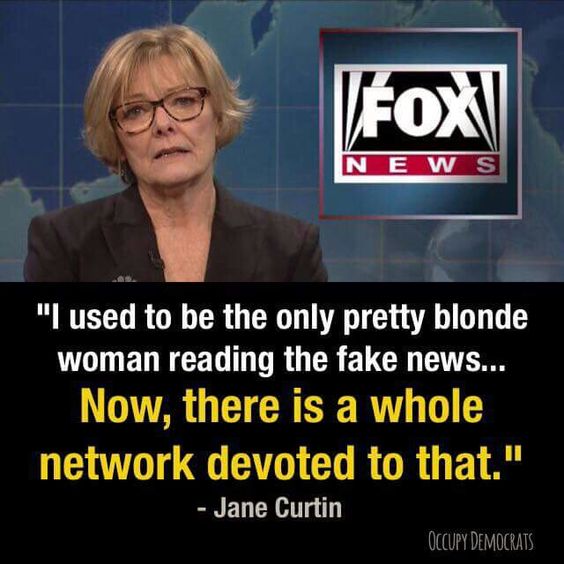




My husband also recently reminded me of this:
 Club Schadenfreude
“… the nature of God” — I thought that god was supernatural. Okay, I see. So Jesus was but also was not.
Why even use the words objective and subjective? While there is not a god to interpret, still, wouldn’t his (Vinny / their) interpretation not be objective? Thus, it all falls into the believing what you want quagmire. And that, to me, is subjective since that is what we, as humans, seem to do.
LikeLike
indeed. there are as many imaginary gods as people who believe in them.
LikeLiked by 1 person
God’s Supernatural Properties and Jesus:
When we discuss God as supernatural, we are referring to His divine attributes—such as omnipotence, omniscience, and omnipresence—that transcend the natural order of the universe. God, in Christian theology, is not composed of physical matter and is not subject to the limitations of space and time. This understanding of God underscores His distinction from creation, affirming that He exists beyond the physical world. Regarding Jesus, the statement “Jesus was but also was not” likely touches on the doctrine of the hypostatic union, which posits that Jesus Christ is both fully God and fully man. This doctrine does not imply a contradiction but rather reflects the profound mystery of the incarnation, where Jesus embodies both divine and human natures without mixture or confusion.
The Use of “Objective” and “Subjective” in Ethics:
The terms “objective” and “subjective” are crucial in ethical discourse because they help us differentiate between moral standards that are seen as universally binding (objective) and those that are perceived as dependent on personal or cultural perspectives (subjective). As the article on Watchmen Council argues, the notion of objective morality—that certain moral truths exist independently of human opinions—requires a foundation that transcends human subjectivity. The article critiques the ability of atheistic frameworks, like the one presented by Emerson Green, to sustain the concept of objective morality without appealing to a transcendent source, such as God. Without God, the article suggests, moral norms risk becoming merely subjective preferences, grounded in societal consensus rather than universal truth. This critique highlights the difficulty of maintaining a consistent moral objectivity within a naturalistic worldview.
Interpretation, Objectivity, and Human Understanding:
Your point about interpretation is particularly important here. If the claim is that all interpretations are inherently subjective, then this would apply to the argument itself. In fact, if what he is saying were true, his own words would not be able to be communicated to us in any meaningful way because, according to his argument, they would be subject to personal interpretation and thus subjective. This would create a self-defeating scenario where the argument undermines its own ability to be understood or accepted as true.
The discussion about interpretation and objectivity addresses the concern that without a higher interpretive authority, all interpretations might seem equally valid, leading to a subjective quagmire. However, as you pointed out, when we engage with texts—whether they are logical, mathematical, or religious—we typically do so with the belief that there is a correct interpretation to be discovered. The article similarly defends the idea that objective moral truths are not subject to personal whims or societal changes, but are grounded in the unchanging character of God. Just as proper interpretive methods can lead us to the correct understanding of a mathematical theorem, so too can careful and faithful exegesis lead us to the correct interpretation of divine revelation.
The fact that humans can successfully interpret complex texts, including those of Holy Writ, suggests that God’s revelation is both clear and sufficient for its intended purpose. Divine condescension in communication means that God, through human agents, has provided us with a revelation that is accessible and interpretable, guiding us toward truth. This affirms the possibility of objective understanding in both morality and theology, countering the notion that all interpretations or moral claims are merely subjective.
This line of reasoning not only addresses the inconsistency in the opposing argument but also reinforces the importance of a transcendent source for objective truth. Without it, even the act of communication itself would be rendered meaningless, as it would be reduced to subjective interpretations with no stable ground for truth.
LikeLike
same baseless nonsense. unsurprisingly, all interpretations, and opinions, aren’t equal since these cultists have no evidence for their claims.
religious texts are in no way like texts on logic or mathmatics.
and since, this god does change, per the bible, it’s rather notable that this is all BS yet again.
LikeLike
Compelling
LikeLike
nice to see you can’t show I’m wrong, Vincent. All you seem to have are attempts at snarky comments, and baseless claims.
Logic and math exist. No religion has been able to show that their claims are true. And no christian has been able to show that they can do what their supposed messiah promised them in their bible.
Why is that, Vincent? Why do you fail and why can’t you show that your god is indeed unchangeable since your bible contradicts you?
LikeLiked by 1 person
1. Baseless Assertions in Atheism:
• You seem to ignore the fact that your response is filled with baseless claims. This is likely because you’re not epistemologically self-conscious, meaning you haven’t critically examined the foundations of your own beliefs. Atheism, at its core, often relies on such unexamined assertions, which is a significant weakness in its approach.
2. Understanding Religious Texts and Interpretations:
• You also stated that all interpretations are opinions. If by “opinions” you mean they represent the beliefs of an interpreting agent, that’s correct. But if you mean to suggest that an interpretation cannot be known to be true, then your point doesn’t follow. This leads to the conclusion that communication itself would be impossible on your view, as no interpretation could ever convey truth. Additionally, I’m not claiming that biblical texts are the same as books on logic or mathematics, but they are both forms of reading material that require interpretation. To dismiss religious texts while accepting others is inconsistent.
3. God’s Immutability:
• You accuse me of making baseless assertions, but it’s evident that you’re not familiar with the theological discussions around God’s immutability. This is a well-established topic in classical theism, often discussed in terms of “Cambridge changes” and other philosophical concepts. Before dismissing the idea of an unchanging God, it would be wise to engage with these discussions instead of speaking from a place of ignorance. Without a rebuttal that avoids question-begging, your argument doesn’t hold up.
4. Existence of Logic and Mathematics:
• You state, “Logic and mathematics exist,” but can you provide a reason to believe that the laws of logic are true? Simply asserting their existence doesn’t explain why they should be considered reliable or foundational. In fact, calling these statements “arguments” is too generous; they’re merely claims without substantiation. The existence of logic and mathematics within a consistent framework requires a grounding that atheism fails to adequately provide, while theism offers a coherent explanation.
LikeLike
your lies about your god’s “immutability” fail.
“Are we punished for the sins of others?
Yes, God often punishes innocent people for the actions of others.
God punishes children for things that their fathers, grandfathers, great-grandfathers, and great-great grandfathers did. He is so proud of this that he repeated it four times in the Bible.
I the Lord thy God am a jealous God, visiting the iniquity of the fathers upon the children unto the third and fourth generation. Exodus 20:5 , Deuteronomy 5:9
Visiting the iniquity of the fathers upon the children, and upon the children’s children unto the third and to the fourth generation. Exodus 34:7
Visiting the iniquity of the fathers upon the children unto the third and fourth generation. Numbers 14:18
“Bastards” don’t choose to be bastards. And yet God punishes them by excluding them from his congregation. And not just them, but all of their descendants for ten generations.
A bastard shall not enter into the congregation of the LORD; even to his tenth generation shall he not enter into the congregation of the LORD. Deuteronomy 23:2
If you fail to follow all of God’s commandments, God will curse your children.
If thou wilt not hearken unto the voice of the LORD thy God, to observe to do all his commandments and his statutes which I command thee this day … Cursed shall be the fruit of thy body. Deuteronomy 28:15-18
For walking after, serving, or worshiping other gods; forsaking Yahweh, not obeying his laws, etc.
Wherefore hath the LORD pronounced all this great evil against us? or what is our iniquity? or what is our sin that we have committed against the LORD our God? Then shalt thou say unto them, Because your fathers have forsaken me, saith the LORD, and have walked after other gods, and have served them, and have worshipped them, and have forsaken me, and have not kept my law. Jeremiah 16:10-11
And sometimes God slaughters children for the unspecified sins of their fathers.
Prepare slaughter for his children for the iniquity of their fathers. Isaiah 14:21
The Great and Mighty God shows lovingkinndness to thousands, but punishes children for the iniquities of their fathers.
Thou shewest lovingkindness unto thousands, and recompensest the iniquity of the fathers into the bosom of their children after them: the Great, the Mighty God, the LORD of hosts, is his name. Jeremiah 32:18
Here are some examples from the Bible:
When Ham saw his father Noah drunk and naked, Noah cursed Ham’s son Caanan and all of Caanan’s descendants with slavery. This curse punished a son (and perhaps an entire race) for something (God knows what) his father supposedly did.
And Ham, the father of Canaan, saw the nakedness of his father …. And Noah awoke from his wine, and knew what his younger son had done unto him. And he said, Cursed be Canaan [Ham’s son]; a servant of servants shall he be unto his brethren. Genesis 9:21-25
God “closed up all the wombs” of the women in King Abimelech’s court to punish him for believing Abraham’s cowardly (half)lie about his half sister and wife, Sarah. So God punished the women for whatever it was that Abraham and Abimelech did.
The LORD had fast closed up all the wombs of the house of Abimelech, because of Sarah Abraham’s wife. Genesis 20:18
God punished all of Eli’s descendants for the behavior of Eli’s sons.
I will perform against Eli all things which I have spoken concerning his house … I will judge his house for ever … because his sons made themselves vile, and he restrained them not. 1 Samuel 3:12-13
God was angry at David for having Uriah killed. As a punishment, God had David’s wives raped by his neighbor while everyone else watched. (The “neighbor” that God chose to do his dirty work for him was David’s own son, Absalom.)
Thou [David] hast killed Uriah the Hittite with the sword, and hast taken his wife to be thy wife … Thus saith the LORD, Behold, I will raise up evil against thee out of thine own house, and I will take thy wives before thine eyes, and give them unto thy neighbour, and he shall lie with thy wives in the sight of this sun. 2 Samuel 12:9-12
And Ahithophel said unto Absalom, Go in unto thy father’s concubines, which he hath left to keep the house … So they spread Absalom a tent upon the top of the house; and Absalom went in unto his father’s concubines in the sight of all Israel. 2 Samuel 16:21-22
To punish David for having Uriah killed and causing others to blaspheme, God killed Bathsheba’s baby boy.
Because by this deed thou hast given great occasion to the enemies of the LORD to blaspheme, the child also that is born unto thee shall surely die. … And the LORD struck the child that Uriah’s wife bare unto David, and it was very sick. … on the seventh day, that the child died. 2 Samuel 12:14-18
God sent a three-year famine on David’s kingdom. When David asks God why, God answers: “It is for Saul, and his bloody house, because he slew the Gibeonites.” So God sent a famine to punish a kingdom for something that a former king had done.
There was a famine in the days of David three years, year after year; and David enquired of the LORD. And the LORD answered, It is for Saul, and for his bloody house, because he slew the Gibeonites. 2 Samuel 21:1
To appease God and end the famine that was caused by his predecessor (Saul), David agrees to have two of Saul’s sons and five of his grandsons killed and hung up “unto the Lord.” God stopped the famine after Saul’s sons and grandsons were killed and hung up for him.
Let seven men of his sons be delivered unto us, and we will hang them up unto the LORD …. And he delivered them into the hands of the Gibeonites, and they hanged them in the hill before the LORD. … And after that God was intreated for the land. 2 Samuel 21:6-14
To punish David for a census that he (and/or) Satan inspired, God killed 70,000 men (and 200,000 or so women and children) in a pestilsence.
And again the anger of the LORD was kindled against Israel, and he moved David against them to say, Go, number Israel and Judah. … So the LORD sent a pestilence upon Israel from the morning even to the time appointed: and there died of the people from Dan even to Beersheba seventy thousand men. 2 Samuel 24:1-15
And Satan stood up against Israel, and provoked David to number Israel. … So the LORD sent pestilence upon Israel: and there fell of Israel seventy thousand men. 2 Samuel 24:1-15
God was angry with Solomon, but decided to punish Solomon’s son rather than Solomon himself, because he liked Solomon’s father (David) so darned much.
Wherefore the LORD said unto Solomon, Forasmuch as this is done of thee, and thou hast not kept my covenant and my statutes, which I have commanded thee, I will surely rend the kingdom from thee, and will give it to thy servant. Notwithstanding in thy days I will not do it for David thy father’s sake: but I will rend it out of the hand of thy son. 1 Kings 11:11-12
Since Ahab humbles himself before the Lord, God decides not to bring evil on him; he’ll bring it on Ahab’s son instead.
Seest thou how Ahab humbleth himself before me? because he humbleth himself before me, I will not bring the evil in his days: but in his son’s days will I bring the evil upon his house. 1 Kings 21:29
Elisha makes his servant (Gehazi) and all his descendants lepers forever.
Elisha said unto him … The leprosy therefore of Naaman shall cleave unto thee, and unto thy seed for ever. 2 Kings 5:25-27
God will punish the children of Shemaiah because their father taught rebellion against the Lord.
Therefore thus saith the LORD; Behold, I will punish Shemaiah the Nehelamite, and his seed … because he hath taught rebellion against the LORD. Jeremiah 29:32
And in the ultimate injustice, God punishes everyone for someone else’s sin, and then saves them all by killing an innocent victim.
Justified by his blood, we shall be saved from wrath. … We were reconciled to God by the death of his Son. … By the offence of one judgment came upon all men to condemnation … By one man’s disobedience many were made sinners, so by the obedience of one shall many be made righteous. Romans 5:9-19
No, God doesn’t punish people for the actions of others.
The fathers shall not be put to death for the children, neither shall the children be put to death for the fathers: every man shall be put to death for his own sin. Deuteronomy 24:16
But the children of the murderers he slew not: according unto that which is written in the book of the law of Moses, wherein the LORD commanded, saying, The fathers shall not be put to death for the children, nor the children be put to death for the fathers; but every man shall be put to death for his own sin. 2 Kings 14:6, 2 Chronicles 25:4
In those days they shall say no more, The fathers have eaten a sour grape, and the children’s teeth are set on edge. But every one shall die for his own iniquity. Jeremiah 31:29-30
The soul that sinneth, it shall die. The son shall not bear the iniquity of the father, neither shall the father bear the iniquity of the son: the righteousness of the righteous shall be upon him, and the wickedness of the wicked shall be upon him. Ezekiel 18:20″ Skeptics Annotated Bible, contradictions
hmm, can you provide a reason why your god supposedly exists? At this time, we don’t know if there even is a why as to logical and math existing. Considering how they are part and parcel of this universe,it seems that they are an attribute of it. Why should your god be considered “reliable or foundational”? As always, vince, you fail to show your god exists. You are simply a fraud.
plenty of opinions can be shown to be true. Your’s can’t. You have indeed claimed that the bibleis the same as books on math and logic. “Additionally, I’m not claiming that biblical texts are the same as books on logic or mathematics, but they are both forms of reading material that require interpretation. To dismiss religious texts while accepting others is inconsistent.”
Nice lie there : “However, as you pointed out, when we engage with texts—whether they are logical, mathematical, or religious—we typically do so with the belief that there is a correct interpretation to be discovered. “
LikeLike
When we discuss God as supernatural, we are referring to His divine attributes—such as omnipotence, omniscience, and omnipresence
A god thingy with such attributes cannot exist. An omnipotence would be able to give a turtle the perfect illusion of having omnipotence, omniscience, and omnipresence yet hiding its own presence from the turtle.
The turtle would be able to do the same thing to a turtle in its created universe leaving the second turtle not knowing its creator nor its creator’s creator.
But the god thingy wouldn’t be able to know whether it was a real god thingy or a turtle given the illusion of being a god thingy with omnipotence, omniscience, and omnipresence. It would not be able to know that it was really omniscient or tricked into being it was omniscient, therefore it could not be actually omniscient. It would know it’s turtles all the way down but cannot know if it is turtles all the way up.
LikeLiked by 1 person
Hah! I love this.
LikeLiked by 2 people
Children often love terrible things
LikeLike
always nice to see how Vince has nothing, but meaningless nonsense. And curious how your bible refers to christians: “Truly, I say to you, whoever does not receive the kingdom of God like a child shall not enter it.” Mark 10
curious how adults, who are told to act like children, love genocidal nonsense.
LikeLike
@Vincent
Do you accept evolution?
LikeLiked by 1 person
I do not accept evolution.
LikeLike
Why do you reject evolution, especially as the inventors of your religion, the Church are perfectly comfortable with it?
LikeLike
I don’t think the Church invented my religion. But I don’t think it is important to discuss this matter. If you believe in evolution, great but that is no reason to reject the claims of Jesus Christ.
LikeLike
You have no evidence of such claims
The gospels are anonymous and the church had the final say as to how the Bible was compiled.
Evolution has a strong bearing upon the bible.
The human genome project has refuted any claims of an original human couple as per the tale of Adam and Eve.
Geology has refuted the nonsense of a the global Noachian Flood.
The tale of Captivity, Exodus and Conquest has been refuted by solid evidence.
All you have is faith I am sorry to say.
LikeLike
Claims of No Evidence:
You assert that the Gospels are anonymous, but there’s actually no evidence to support that claim. Every time we have the Gospels and they are assigned, they are consistently attributed to Matthew, Mark, Luke, and John. Moreover, there is both internal and external evidence supporting the claim that the Gospels were written by eyewitnesses or those closely associated with them. Scholars such as Peter Williams, Lydia McGrew, and Richard Bauckham have provided substantial arguments and data to support this view. The notion of anonymity is a modern scholarly theory that doesn’t hold up against the historical evidence we possess.
Science and Antirealism:
You bring up evolution and its bearing on the Bible, but I think it’s important to clarify something first: I’m not a scientific realist; I’m a scientific antirealist. The position I hold, as articulated by Jimmy Stephens, is known as “Metaphorical realism / modified instrumentalism.” This view recognizes that scientific entities, particularly unobservables, are to some degree fictional or metaphorical due to the underdetermination of theories. We can refer to this as the “fictional haze” surrounding scientific entities. So, even if I were to entertain evolution as a concept, I wouldn’t necessarily treat it as a literal truth, and even if Genesis were fiction, that wouldn’t compel me to accept evolution as a valid explanation.
Atheism and Science:
Additionally, given that I find atheism to be inherently incoherent, I see it as fundamentally contradictory to science. Under atheism, there’s no grounding for objective moral facts and obligations, no reason to trust your own mind, and no justification for believing in causal connections or the validity of inductive reasoning. Essentially, if we know anything at all, atheism as a worldview fails. It’s built on a foundation that cannot account for the very tools and concepts that make science possible.
The Global Flood and Geology:
Regarding the global flood, it’s true that a literal, worldwide flood as described in a straightforward reading of Genesis is debated. However, both global and local flood theories are within the bounds of orthodoxy. Some interpretations suggest that the flood was regional rather than global, which aligns with certain geological findings. Moreover, the story of the flood has theological significance beyond just a historical account, serving as a symbol of God’s judgment and mercy.
The Exodus and Archaeology:
As for the Exodus and the Conquest narratives, while some scholars question the traditional accounts, others argue that there is archaeological and textual evidence supporting key elements of these stories. The absence of overwhelming evidence doesn’t equate to a refutation, and much of ancient history remains obscure or debated among experts. If you want more in-depth defense on this topic, I recommend listening to Dr. David Falk, who has provided extensive research and insight into the archaeological and textual evidence that supports these narratives.
Faith as Foundational to Reason:
You suggest that all I have is faith, as if faith were something less than reason. But in the Christian tradition, faith is foundational to reason and thus can never subvert it. Faith isn’t blind belief; it’s trust based on evidence, experience, and reason. The Christian faith is rooted in historical events, philosophical arguments, and personal encounters with the divine. While there are mysteries that go beyond what science can explain, this doesn’t diminish the rational foundation of faith.
LikeLike
Arguments, no matter how clever or apparently well reasoned do no equate to evidence. They remain unsubstantiated claims. Period.
There is no evidence of eyewitness testimony in the gospels, and scholarly consensus regards the gospels as anonymous.
Atheism is simply the lack of belief in gods. It certainly isn’t a worldview.
If you have evidence to show that gods exist then please, feel free to present it.
Morality derives from evolution and culture.
What other possible source could there be?
The myth of the Noachian Global Flood.
Debated? By whom?
It is a myth. And a plagiarized one at that.
Exodus.
What evidence supports the tale?
Archaeological or otherwise.
Who are the archaeologists who have evidence to support the bible?
Falk is an Egyptologist. Can you tell me how many digs he has led /been involved in that are relevant to the topic?
If faith is based on evidence as you claim what specific evidence are you referring to?
How does an individual have an encounter with the divine?
Divine what, exactly?
What evidence supports such a claim?
LikeLike
Arguments vs. Evidence:
You’re right that arguments need to be based on evidence to be compelling. However, when I present arguments, they are grounded in both historical and philosophical evidence. For example, the claim that the Gospels are based on eyewitness testimony isn’t just an unsubstantiated argument; it’s supported by both internal evidence (like the specific details and firsthand perspectives within the texts) and external evidence (such as early church traditions and the writings of early Christians who consistently attributed the Gospels to Matthew, Mark, Luke, and John). Scholars like Peter Williams, Lydia McGrew, and Richard Bauckham have provided extensive evidence to support this view, despite what some might claim is a scholarly consensus on anonymity.
Eyewitness Testimony and the Gospels:
There is indeed evidence of eyewitness testimony in the Gospels, contrary to your claim. The Gospels include specific details that suggest firsthand accounts, such as the inclusion of names, geographical details, and cultural practices. Additionally, early church writings consistently attribute the Gospels to their traditional authors, who were either direct witnesses or had access to those who were. This challenges the notion that the Gospels are anonymous in the way some modern scholars suggest.
Atheism as a Worldview:
You assert that atheism is merely a lack of belief in gods and not a worldview. However, when atheism is applied to broader questions about the origins of the universe, morality, and human purpose, it inevitably forms a worldview. For instance, if atheism denies the existence of a deity, it must then provide an alternative explanation for why the universe exists, where moral values come from, and how we can trust our cognitive faculties. These are foundational elements of any worldview. And on that note, you’re not really showing that knowledge is even possible on atheism; you’re assuming that it is. If knowledge is possible without God, then prove it. It’s curious how everything needs evidence except when it’s something you or someone who agrees with you says.
Existence of God and Evidence:
If you’re looking for evidence of God’s existence, there are numerous lines of argument and evidence available, ranging from the cosmological argument (which deals with the origin of the universe) to the moral argument (which discusses the foundation of moral values) to the historical evidence surrounding the life, death, and resurrection of Jesus. These arguments are not just clever reasoning; they are based on evidence that has been debated and discussed for centuries. The historical reliability of the New Testament documents, for example, is a critical piece of evidence that supports the Christian claim of a historical and divine Jesus.
Objective Morality and Evolution:
You suggest that morality derives solely from evolution and culture, but this perspective struggles to account for objective moral values. What you’re describing are evolved behaviors, which might explain why people behave in certain ways, but that’s not the same as establishing a normative point—what people ought to do. Objective morality, which posits that certain moral truths are binding regardless of individual or cultural beliefs, isn’t consistent with an explanation that reduces morality to mere evolutionary or cultural development. If morality is purely a product of evolution, it lacks the authority to claim that certain actions are objectively right or wrong. Theism, on the other hand, argues that objective moral values are grounded in the character of God, providing a consistent and unchanging standard.
The Global Flood and Historicity:
You claim that the Noachian Flood is a myth and plagiarized. However, the debate over the historicity of the flood is ongoing among scholars. Some argue that the flood narrative is based on a real event, perhaps a large regional flood, while others see it as a theological story with significant meaning. The claim that it is plagiarized is based on the similarities between the biblical account and other ancient Near Eastern flood narratives, but these could also be understood as different cultural memories of the same event.
Exodus and Archaeology:
The Exodus narrative is supported by several scholars, including James Hoffmeier, John Currid, Kenneth Kitchen, and Gleason Archer. While direct archaeological evidence is limited, there are indirect indicators, such as changes in settlement patterns and cultural shifts, that align with the biblical account. Dr. David Falk, although an Egyptologist, brings valuable insights into the context of the Exodus. The criticism of his involvement in digs is less relevant when considering that much of archaeology involves interpretation of existing findings, not just leading new digs.
Faith as Foundational to Reason:
You suggest that all I have is faith, as if faith were something less than reason. But in the Christian tradition, faith is foundational to reason. Faith isn’t blind belief; it’s trust based on evidence, experience, and reason. The Christian faith is rooted in historical events, philosophical arguments, and personal encounters with the divine. Faith provides the foundation upon which reason operates, ensuring that reason itself has a coherent basis.
LikeLike
vince doesn’t grasp that any modern fiction and other religion’s myths, have the same references to real places, real people and real cultural practices.
consistent lies doesn’t mean that they aren’t lies.
LikeLike
still no evidence morals are objective or they come from any supernatural source. As usual, you have baseless presuppositions.
LikeLike
You might enjoy this:
LikeLike
Before I read this who/ what is Jimmy Stephens?
LikeLike
Christian Apologist
LikeLike
Then I have no interest or reason to read him.
LikeLike
lol sure, it was just a suggestion.
LikeLike
I have listened or read more apologists than is probably good for my health.
None deal with evidence.
All deal in faith.
If one is genuine in the search for truth/fact then why would anyone choose the bible as a primary source?
LikeLike
If anyone is honest they won’t be atheist, because atheism is sinful and everyone knows it’s wrong. = How you sound
LikeLike
Atheism is the lack of belief in gods.
Nothing more.
I have already explained this. If you disagree consult a dictionary.
If you have evidence of gods then please present it.
LikeLike
Fourteen times of explaining it because village atheists don’t listen. I’m referring to atheistic worldviews. Please stop trolling. I presented it, atheism makes knowledge impossible, knowledge is possible. Please stop trolling
LikeLike
There is no Atheistic Worldview.
Individuals atheists have their own personal worldview.
Atheism is the lack of belief in gods and
does not preclude knowledge. What an idiotic, asinine thing to write.
LikeLike
“There is no Atheistic Worldview.
Individuals atheists have their own personal worldview.”
I guess you lack basic comprehension. But the fact that atheists have worldviews entails they are just a part of the set known as “atheistic worldviews”. Why are you people on village atheist island so daft to not get even basics? You people aren’t worth my time
LikeLike
hmm, so since christians all differ in worldview, and can’t agree on the most basic things, we now can consider them just “christian worldviews”.
LikeLike
No, I understand English perfectly well, thank you.
Christianity is a Worldview and encompasses the doctrine and tenets of the faith.
Atheism is simply the lack of belief in gods, your god, Yahweh and every other man made deity. It has no doctrine, codes, dogma, ethics or moral pronouncements of any kind.
It is unfortunate, but telling that so many indoctrinated theists, and especially Christians of your ilk, want to try to drag non-believers down to their level of wilfull ignorance and blatent dumbfuckwittery.
Believe me, there is nothing clever in your display of disingenuity and simply marks you as a giant Arsehat.
LikeLiked by 1 person
And I asked you to present evidence of gods if you have it. Still waiting…
LikeLike
I suspect you’ll never get it. Poor Vince/Jimmy has done such a classic christian fail on his own blog post about evolution>
vincentthesire
August 13, 2024 at 8:10 pm
A child can show you’re wrong, but you like a child cannot accept such. That’s why you say incoherent nonsense with little insults. You’re not worth talking to
Like
clubschadenfreude
August 13, 2024 at 8:19 pm
so, get this child, dear since you *can’t*.
LikeLiked by 1 person
Unsurprisingly, knowledge is possible without you or your little imaginary friend, Vince. You assume it is not, since you need a job for your imaginary friend.
There is no one worldview for atheists. I happen to be an atheist and have a worldview largely based on epicureanism and star trek and marvel comics.
Ark isn’t trolling. he’s showing you to be a liar and a failure.
LikeLike
Still no evidence for your god, and you still can’t do what jesus promises to true followers per the bible.
LikeLike
and yet more baseless accusations from Vince. Poor Vince, christians can’t agree on what “sin” is, nor can they show that there is a god that thinks things are “sinful”. Sin is made up nonsenes by cultists who need to try convince ignorant people that some god agrees with their personal hates and desires.
Happily, nope, “everyone” does not think atheism is wrong, just petty little people who get upset that people dare not give them the external validation they crave.
LikeLike
curious he seems not to exist anywhere except for your blog. Indeed, it seems that you are the only “council” member and it seems that you are likely “jimmy”, vince. Jimmy is amazingly ignorant.
LikeLike
Complete garbage from ignorant cultists. I’m guessing that “jimmy” is vince, who has a bit of a need to falsely claim that he is part of some grand organization: “The Council is a group of brethren dedicated to proclaiming the truth of the Gospel of Jesus Christ to a lost and dying world. We do not run from intellectual debates, nor will we succumb to the so called accepted truths of the materialistic world.”
As is typical for christians, they attack long rejected ideas, instead of addressing current science. This is because this cult depends on willful ignorance, fear and hate. Pure uniformitarianism was rejected at least 100 years ago.
LikeLike
Nice to see how ignorant Vince is about bible scholarship. He also can’t show any of these “substantial arguments and data” from christain apologists. Show what you think the best argument and data is, Vince. Otherwise, you are just throwing shit at a wall and hoping it sticks.
There is no historical evidence for either Jesus or the apostles, so you fail again. Curious how no one noticed these guys, despite the bible claiming how famous they were. Do tell why no one noticed a guy wandering around roman-occupied Judea with a literal roman legion’s worth of men following him.
It’s great to see these ignorant cultists dependent on science and yet they claim it is “fictional”. It’s even better since there seems to be no person “Jimmy stephens” and no such thing as ““Metaphorical realism / modified instrumentalism.”” Associated with such a person, or even a James Stephens.
I do love when these cultists end up with little more than solipsism to try to find a place for their imaginary friend.
Poor dear, and now we have an appeal to personal ignorance fallacy as why poor Vince should be believed. That he’s too stupid to understand atheism, which is odd, him being an atheist, doesn’t mean that his god exists.
Reality is the basis of facts, and as much as these cultists try, they can’t deny reality. Tehre is plenty of reason for me to trust my mind. I interact correctly with reality and I’m not dead yet.
Atheism isn’t a worldview, but these cultists can’t stop lying about that. If our minds aren’t trustworthy, then every theist can’t believe in their imaginary friend.
I’m a geologist. Vince is a very incompetent liar, as are all creationists. Funny how Christians can’t agree if their ignorant set of books is to be taken literally, as metaphor, as exaggeration, etc. Each Christian claims only their version is the right one and nope, they are not all equally accepted in Christian “orthodoxy”. Vince simply lies about that. Per his bible, jesus says the flood as described by Genesis was real, so gee, is the bible wrong? Is jesus wrong?
The flood is an account of a moron god that is too stupid and vicious to simply make the “wicked” people vanish, and not drown animals.
No evidence of any archaeology supporting the lies of Exodus. Falk is a hilarious fraud, who tries to claim that the bible’s words are somehow wrong and claims that it couldn’t be the 600,000+ people and animals wandering around like Exodus *and* Numbers claim. That causes a problem with this whole house of cards since if there weren’t hundreds of thousands, then the cities that these “slaves” supposedly built, couldn’t have been built with so few people. As is typical, despite the route given in the bible, not a single archaeologist, including Falk, ever goes there to dig. Not even rich cultists will pay for such nonsense, despite them having a ark museum, a bible museum, etc. Wouldn’t it be great for them to get the ark of the covenant? How about some chariot wheels in the sea?
Yep, all poor Vince has is faith, belief in things he has no evidence for, just like any other cultist. In all cults, faith is claimed to be foundational to reason, and yet not one of these cultists can show how that is supposed to work. Faith is indeed blind belief, since not one cultist has evidence for their claims. Trust is earned, and not simply given.
Every cult claims to have “evidene” which they can never produce, “experience” which is entirely subjective, and reason, which they can’t use. There are no historical events showin in the bible, and philosophical arguments never get to reality. Every cult claims “personal encounters with the divine” and surprise, each cultist claims the other cultists are lying.
All Vince has are literally god of the gaps arguments aka there are things we don’t understand yet so goddidit.
LikeLike
Which claims, since you christains can’t agree on what jesus wants or show that jesus exists at all?
LikeLike
and as always these cultists can’t even agree on the creationist lies they want to tell, unable to convince each other that their version is the right one.
LikeLike
I’ve already explained how this line of attack is self defeating. Please get off the New atheist “I refuse to think” line of attack. You’re only making yourself look stupid
LikeLike
Poor dear, it’s great how Vince has nothing but more lies. Unsurprisngly, we don’t refuse to think, and we have shown your lies to fail, Vince. It’s great when a cultist tries to gaslight me by trying to make me think i should feel “stupid”.
LikeLike
“Everything that Debunks my silliness is Lies from Cultists! Please Seals clap for me in my internet coping session!”
LikeLike
Yep, Vince has nothing and now we get to be treated to more baseless claims from a failed cultist. It’s great when these cultists try to be insulting, since insults only work if one’s opinion is valued.
I don’t value the opinion of a known fraud.
LikeLike
Vincent, truth doesn’t require any gods. Either 1+1=2 or it doesn’t.
As for moral claims, I assert that I am more moral than the god of the Bible – and so are you. To my certain knowledge, I have not drowned any planets or ordered the massacre of the firstborn, and I wouldn’t dream of permitting the existence of a place of eternal punishment (and would destroy such a place immediately if one existed).
LikeLike
1. Truth and God:
• You claim that truth doesn’t require any gods, but let’s dig a bit deeper. While I’m not a divine conceptualist, it’s important to note that divine conceptualism shouldn’t be taken for granted—entire schools of thought, from Augustine to James Anderson, have debated this issue. However, it’s still plainly obvious that if propositions exist, they must exist in a mind. In the Christian worldview, we can trust numerical truths like 1+1=2 because God has created us and revealed an orderly world where these truths don’t fluctuate. The consistency of these truths is grounded in God’s nature, which doesn’t change. Now, you assert that truth exists independently of God, but you’ve provided no reason why anyone should accept that claim. What is a universal, and why do these truths remain consistent in your view? Without grounding them in anything, there isn’t even a discussion of why these truths hold at all. Your assertion seems to lack any justification.
2. Moral Claims and God’s Justice:
• As for your moral claims, I grant that neither you nor I have drowned planets or ordered massacres. But that doesn’t automatically make us morally superior to the God of the Bible. Your argument assumes that human standards of morality should apply to God, but that’s a misunderstanding of the nature of divine justice and sovereignty.
• Let’s explore this further. You seem to believe that it’s easy to ground objective moral laws in human opinions or societal norms. But here’s the dilemma: Are the things you consider morally egregious based on reason, or are they simply your personal preferences? If they’re based on reason, then you’re implicitly acknowledging that moral truths exist independently of human whims—grounded in something beyond ourselves. If they’re merely preferences, then they’re arbitrary and irrational to impose on others.
• The Christian worldview provides a coherent basis for objective morality, where moral laws are grounded in the character of a just and holy God. Your attempt to elevate human morality over divine morality fails to address the need for an objective standard beyond human opinion.
LikeLike
“While I’m not a divine conceptualist, it’s important to note that divine conceptualism shouldn’t be taken for granted—entire schools of thought, from Augustine to James Anderson, have debated this issue.”
Appeal to popularity. Funny how not a single one has been able to show any gods exist at all.
“he consistency of these truths is grounded in God’s nature, which doesn’t change. ”
Alas, the bible says he does. Does this god punish the sons for the sins of the father? Ezekiel 18: No. Exodus 20: yes.
Yep, it does make us superior to your imaginary friend when we don’t feel the need to murder people. Curious how christians need a different set of morals for their genocidal idiot god. This means their claims of objective morality fail since if morality was objective, it would apply to everything. All poor Vince has is a morality that is no more than might equals right.
The christain worldview can’t agree on what morals their imaginary friend wants, with each christian inventing a different set.
LikeLike
1. Casting Doubt on Independent Truth Claims:
• You accuse me of an “appeal to popularity,” but that’s not what I’m doing here. I’m not trying to prove divine conceptualism by name-dropping; I’m simply pointing out that your claim—that truth and other concepts exist independently of God and that this is somehow obvious—is far from convincing. It’s obvious to you, maybe, but not to the many significant thinkers who’ve spent centuries debating it. If it were as clear-cut as you seem to think, we wouldn’t have entire schools of thought questioning it. Your assumption that truth just “is” without any grounding shows a lack of depth in your understanding.
2. God’s Immutability and Biblical Consistency:
• Your attempt to claim a contradiction between God’s immutability and biblical justice is just another example of you not understanding what you’re talking about. The Bible discusses both individual responsibility and corporate guilt—concepts that aren’t even remotely contradictory. If you knew anything about legal or ethical discussions, you’d know that these distinctions are still recognized today. Ezekiel 18 is about personal responsibility, while Exodus 20 deals with the impact of sin on a community or family line. But since you believe no objective interpretations exist, it’s hilarious that you’re even trying to argue this point. If interpretations are purely subjective, as you claim, then why should anyone take your interpretation seriously? You’ve undermined your own argument before it even starts.
3. Moral Superiority and Misrepresentation of Christian Morality:
• You like to think that refraining from murder makes you morally superior to the God of the Bible, but this only shows how little you grasp the concept of divine justice. God, as the Creator, has rights and authority that you don’t, and applying your limited, human perspective to divine actions is as misguided as it gets. Your attempt to paint Christians as following a “genocidal idiot god” is just another example of your shallow understanding of Scripture and theology.
• You also claim that Christians need a different set of morals for God, as if that somehow negates objective morality. But this shows you don’t even understand what objective morality is. It’s not about what you like or don’t like—it’s about moral laws being grounded in something beyond personal or cultural whims, specifically in the character of a just and holy God. Just because you don’t agree with God’s actions doesn’t mean they aren’t objectively moral; it just means you don’t like the idea that you’re not the ultimate moral authority.
4. Diversity Within Christianity:
• And then there’s your claim that disagreements among Christians invalidate the Christian worldview. If you understood anything about human nature or intellectual history, you’d know that disagreement doesn’t mean objective truths don’t exist—it just means humans are fallible. The diversity of interpretations within Christianity isn’t proof that morality is subjective; it’s proof that people are complex and that understanding divine truth takes effort. The core of Christian morality—love of God and neighbor, justice, mercy—remains consistent, even if people sometimes get it wrong. But I wouldn’t expect you to grasp that nuance, given the simplistic way you approach these issues.
LikeLike
More nonsense from the “sophisticated theologian” who isn’t so sophicated at all. Vince, you have no evidence for your claims.
you are indeed using an appeal to popularity aka all of these people have discussed it so it must be true. No evidence for your god. Plenty of evidence for truth, logic, etc. Any cultist can use this nonsense for their god, and yet not one of you can show that it is *your* particular god.
That people wasted their time on imaginary nonsense is not evidence that nonsense is true.
Still no evidence your god exists or is unchanging. Plenty of evidence it is not unchanging since Christians can’t agree on what they want to claim it wants, has done, etc.
No such things as “biblical justice”, just an ignorant lunatic of a god that can’t be shown to exist and punishes people for what others do. Now, Vince, would it be just if you were punished for a crime I committed? I suspect you’d say no.
I know quite a bit about legal and ethical discussions. Curious how the garbage of “corporate responsibility” is simply nonsense in ethics and law. Everyone is not responsible for what someone else did. It’s hilarious how you try to claim that Ezekiel 18 is about personal responsibility, and somehow Exodus 20 is different, when they both use the same language. You have invented a lie to try to make them different, Vince. Curious how both have the children and the parents, and one says that children will be punished for what the parents did, and the other says they won’t be.
again, let’s look at the verses and see just how much you try to lie:
“19 Yet you say, ‘Why should not the son suffer for the iniquity of the father?’ When the son has done what is lawful and right, and has been careful to observe all my statutes, he shall surely live. 20 The person who sins shall die. A child shall not suffer for the iniquity of a parent, nor a parent suffer for the iniquity of a child; the righteousness of the righteous shall be his own, and the wickedness of the wicked shall be his own.” Ezekiel 18
vs.
“5 You shall not bow down to them or worship them; for I the Lord your God am a jealous God, punishing children for the iniquity of parents, to the third and the fourth generation of those who reject me, 6 but showing steadfast love to the thousandth generation of those who love me and keep my commandments.” Exodus 20
It’s great how you admit you are wrong since you try to change the subject by trying the moral argument for your imaginary friend. Again, curious how Christians can’t agree on what morals this god gave humans so you have no evidence for objective morality. Indeed, yuou have no evidence this god gave morals to anyone because even in your bible, your god never gives morality to humans. Eve took it.
Vince, show the evidence you have that one is about individuals and one is about “community”. Surely you can provide that, right? You didn’t just invent it with nothing, right? Where is the supposed “context” that changes the meaning of “parents” and “children”?
I have plenty of evidence those words don’t magically change meaning, thanks to various bible interpreters.
Yep, refraining from murder does make me morally superior to your god. Thanks for admitting your god does murder, per the silly bible stories. No evidence your god has any more “rights” than any other being, and again, you can’t even show it exists at all. If morals are objective, then by definition they would apply to this god too. That your morals are subject to who someone is makes them literally subjective.
All you have is the usual baseless christain claim “my tyrant had a good reason to commit genocide”. Curious how all followers of abusers make that same claim.
Unsurprisingly, again, morals are subjective since you can’t show your god is any “source” nor can you agree on what it wants nor show what it wants. If morals are an objective truth, then your god is immoral if it breaks them.
Unsurprisingly, disagreement amongst cultists who each claim to have the one and only truth, and who can’t show this to be the case does show that objective truth doesn’t come from their cult. If your god can’t make itself clear to “fallible” humans, then it is less than them. Humans can, and do make themselves clear. That your god simply can’t shows that it is not what you claim.
That people are complex doesn’t excuse a supposedly omnipotent god’s failure.
Unsurprisngly, Christian morality doesn’t have “love of god and neighbor”, justice and mercy” as a core. It has no love of the neighbor, considering the constant genocide. It has no justice or mercy, since, as you admit, this god murders people for what they didn’t do. This god failed at mercy right from Eden, dear. It could have explained itself, forgiven adam and eve (you do remember forgiveness, right?) and started again, but nope, it fails repeatedly to fix its stupidity all through the bible, finally deciding it needs a human blood sacrifice by torture to make itself happy.
There is no nuance at all, just an amazingly impotent and ignorant imaginary friend.
LikeLike
“or tricked into being it was omniscient” should be “or tricked into believing it was omniscient”
LikeLike
Here’s the response with your nuanced understanding of divine simplicity and omnipotence:
LikeLike
More fail from Vince. How nice.
Funny how Vince has to make excuses for his imaginary and failing friend. Unsurprisngly, per the bible, this god is repeatedly constrained by its supposed creation, being unable to handle iron chariots, unable to stop a snake in the garden, etc. This god is again changeable or the the bible is wrong, since it has this god punishing people for other people’s actions and it has it not punishing people for other people’s actions.
No evidence this god exists at all, so claims about contingency fail.
Unsurprisngly, Vince can’t read, and didn’t get the turtles all the way up scenario. Nothing about the argument says that these turtles don’t have the abilities assigned. That’s just a baseless assertion from an ignorant Christian.
There is no “god as traditionally understood” since Christians, and other theists, can’t agree on their gods. No evidence this imaginary being is necessary at all. That is a presupposition by an ignorant cultist.
Curious how your god isn’t omniscient then since it most certainly doesn’t know all truths, aka facts. Stars aren’t little lights in a solid dome that can be knocked off.
As oft happens, the Christian has no idea what a category error even is. This god is indeed a thing among things, the Christian has to use fallacies like special pleading to get away from that.
Curious how your god can’t prevent itself from being deceived, since this god failed with Satan.
LikeLike
Atheist Cope mode engaged: “Ur dumb cultist and wrong Aron Ra is muh god”
You’re embarrassing bad at this.
LikeLike
Nice set of lies, Vince. I see you have nothing else. Happily, I’m very good at showing how cultists fail miserably in their claims.
Vince, do tell us why you and your fellow christians can’t do what jesus promises to his true followers in your bible.
LikeLike
Regarding the Uriah the Hittite story, David invited Uriah to visit with him. He suggested that he go to his own house and “wash his feet”. Uriah understood the euphemism to mean “sleep with his wife and enjoy her company”, but Uriah refused because he wouldn’t feel right doing that while his men were sleeping in a field outside the city. Had Uriah done that, he would not be suspicious the next time he came to Jerusalem and saw his wife with a baby. David was forced to choose between Uriah or Bathsheba and his own child.
So what was Jesus doing in John 13:1-17, especially
John 5:12 NIV
When he had finished washing their feet, HE PUT ON HIS CLOTHES and returned to his place. “Do you understand what I have done for you?” he asked them.
LikeLike
oh dear. 🙂
LikeLike
“All” atheists do not agree anymore than all Christians do. We have no text or rules or any kind of belief (or unbelief, whatever that means) systems. It is rightly a difficult thing for believers to understand.
However, supernatural is not in nature. If it’s not within nature, fine. But that also means that it cannot be proven to exist. Thus, the average atheist has ever right to not believe that a supernatural exists. It’s simple.
Consequently, since god does not exist, all religion is pointless except as a way to control people and to gain power and money.
LikeLike